

Labour Pain Relief Options In New Zealand: What Every Parent Should Know

If you're pregnant, chances are you've already wondered:
"How painful is labour going to be?"
It's one of the most common questions I hear from first-time parents.
The good news is that there isn't just one way to manage labour pain. In New Zealand, you have a range of options available—from simple breathing techniques and movement to medical pain relief if you decide you need it.
Understanding your options before labour starts can help you feel calmer, more confident and able to make informed decisions on the day.
In our Antenatal Classes Auckland, we spend time explaining each option so you know what's available, when it might help, and what to expect.
Why It Helps To Learn About Pain Relief Before Labour
Labour is unpredictable.
Some women use only breathing and movement. Others decide to have an epidural. Many use a combination of different techniques throughout labour.
The important thing isn't choosing one "perfect" option before birth.
It's understanding your choices so you can make decisions that feel right for you as labour unfolds.
Preparation reduces uncertainty—and feeling informed often helps reduce anxiety too.
Natural Labour Pain Relief Options
Many women find that simple techniques make a significant difference, especially in early labour.
These include:
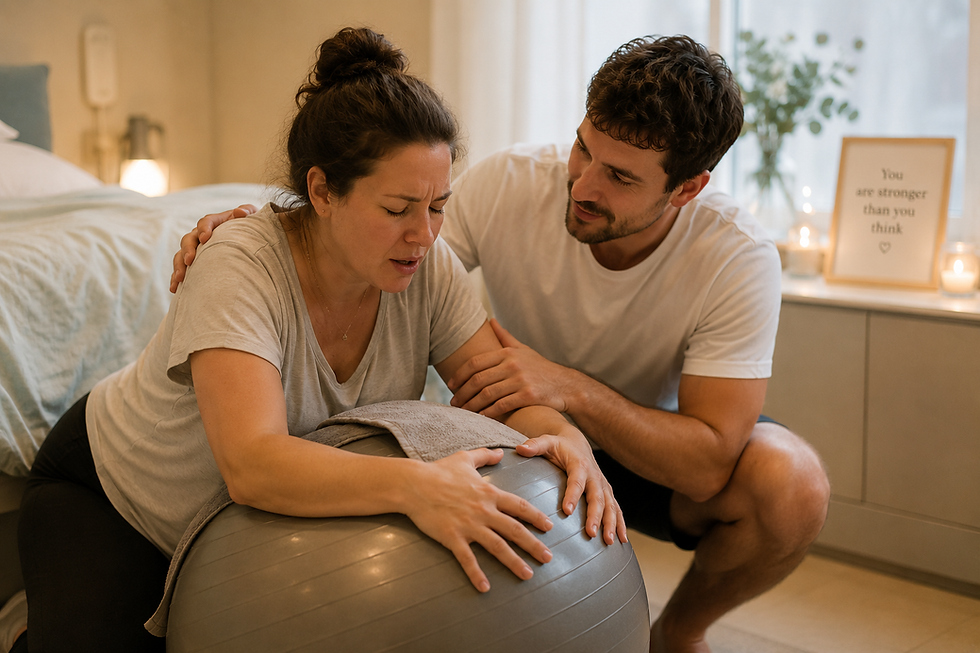
Staying upright and moving around (I show you how in my Easier Birth Method)
Changing positions regularly (I show you how in my Easier Birth Method)
Breathing Techniques (I show you how in my Easier Birth Method)
Warm showers or baths
Massage from your birth partner (I show you how in my Easier Birth Method)
Heat packs
Birth balls one of my fav's!!
Creating a calm birth environment
Counter pressure techniques (I show you how in my Easier Birth Method)
Hypnobirthing Audios (I show you how in my Easier Birth Method)
These techniques don't remove labour sensations completely, but they can help your body work with contractions rather than fighting against them. You will need non medicated technics in every labour no matter how you choose to give birth. DON'T SKIP LEARNING THEM AND PRACTISING THEM!
Many women are surprised by how much difference movement and good support can make.
Gas (Entonox)
Gas and air is one of the most commonly used pain relief options in New Zealand.
It works quickly and wears off quickly, giving you control over when you use it.
Some women find it takes the edge off contractions, while others find it doesn't help very much.
Possible side effects include:
Light-headedness
Dizziness
Nausea
Because it leaves your system quickly, it's generally considered a very flexible option during labour.
Sterile Water Injections
Sterile water injections are sometimes offered if you're experiencing intense lower back labour.
Tiny amounts of sterile water are injected just under the skin of the lower back.
The injections sting for around 20–30 seconds, but many women experience significant relief from persistent back pain afterwards.
Not every maternity unit offers them, so it's worth asking your midwife what's available.
Morphine And Other Opioid Medications
Opioid medications may be offered during labour to help you rest or cope with contractions.
These medications can reduce pain but won't remove it completely.
Possible side effects include:
Sleepiness
Nausea
Drowsiness for both mum and baby if given close to birth
Your midwife or obstetric team will discuss whether this option is appropriate based on where you are in labour.
Epidural
An epidural provides the most effective medical pain relief available during labour.
A small tube is placed into your lower back by an anaesthetist, allowing medication to numb much of the pain from contractions.
Many women who have epidurals still have positive, active birth experiences.
Like any intervention, there are benefits and considerations.
These may include:
Reduced pain
Needing continuous monitoring
Limited mobility
Possible effects on pushing
Increased chance of needing assistance with birth
Your care team will explain these in detail if you choose an epidural.
Can You Change Your Mind During Labour?
Absolutely.
One of the biggest misconceptions is that you have to decide everything before labour begins.
You don't.
Many women start with movement and breathing before choosing medical pain relief later.
Others plan for an epidural and discover they're comfortable for much longer than expected.
Birth isn't about sticking rigidly to a plan.
It's about understanding your options and making informed decisions as labour progresses.
Your Birth Partner Can Make A Huge Difference
One of the most effective "pain relief tools" isn't a medication at all.
It's a well-prepared birth partner.
Knowing when to encourage movement, offer massage, suggest different positions, remind you to breathe, or simply provide reassurance can make a remarkable difference to how supported you feel during labour.
This is why our antenatal classes include partners throughout the day.
Birth is something you prepare for together.
You Don't Need To Choose Just One Option
Many women use several different pain relief methods throughout labour.
For example:
Movement during early labour
Warm shower
Massage
Gas during active labour
Epidural later if needed
Every labour is different.
The goal isn't having the "perfect" birth.
The goal is feeling informed, supported and confident in the decisions you make.
How Antenatal Classes Help You Prepare
One of the biggest sources of anxiety isn't labour itself.
It's not knowing what to expect.
In my Antenatal Classes Auckland, I explain:
All available pain relief options in New Zealand
The pros and considerations of each option
When different pain relief methods are commonly used
Practical comfort techniques you can use at home and in hospital
How partners can provide effective support during labour
What happens if your plans change
By the end of the class, most couples tell me they feel far more confident about whatever birth brings.
Donna x
Modern Antenatal Classes Auckland
Frequently Asked Questions
What is the most effective pain relief during labour?
An epidural provides the strongest medical pain relief. However, many women successfully use movement, breathing, water, massage and gas either on their own or alongside medical options.
Can I have an epidural straight away?
This depends on your stage of labour, the availability of an anaesthetist and your individual circumstances. Your maternity team will discuss the best timing with you.
Is gas enough for labour pain?
For some women it is. Others use it alongside movement, water or later decide to have an epidural. Every labour is different.
Do I have to decide my pain relief before labour?
No. Many decisions can be made during labour. Understanding your options beforehand simply helps you make informed choices when the time comes.
When should I attend antenatal classes?
Most couples attend between 28 and 34 weeks of pregnancy, giving them plenty of time to prepare while everything is still fresh before baby arrives.
Feel Calm, Prepared And Ready For Birth
Learning about labour pain relief isn't about deciding exactly how your birth will unfold.
It's about understanding your options so you can approach birth with confidence instead of uncertainty.
If you're looking for Antenatal Classes Auckland, our one-day, evidence-based classes are designed to help first-time parents understand labour, birth, pain relief and how to feel prepared—whatever your birth journey looks like.
Book your class today and leave feeling informed, reassured and ready to meet your baby.


![CCBirthPrep - home 15 [web].JPG](https://static.wixstatic.com/media/761dd3_fa36626e949c4b47bcf4ab7b9176318a~mv2.jpg/v1/fill/w_296,h_194,al_c,q_80,usm_0.66_1.00_0.01,enc_avif,quality_auto/CCBirthPrep%20-%20home%2015%20%5Bweb%5D_JPG.jpg)
Comments